Search J & A Abroad

Sunday, September 11, 2011

Singapore the City State

Despite having had the same party, and effectively the same Government,  in charge since its independence over 50 years ago, the people of Singapore appear to be pretty gosh-darn happy.  Singapore has a healthy economy and all seems well - things really hum there.   We spent five days in Singapore.  More specifically, we spent five days in Singapore eating.  The city-state is heralded globally as a world-class food city and it did not disappoint.  (Not even after coming from Melaka by way of KL and Bob's food extravaganza.)

Singapore's food is really good, but what really makes it great (truly, to paraphrase Anthony Bourdain, "a foodie's paradise") is the food culture that seems to eminate from the whole city.  There are food, or hawker, centres (we would call them food courts, but these have much more soul than our version) everywhere, most forehead-smackingly cheap and delicious.  People in S-pore like to eat out as much as we do (and who can blame them with such amazing food costing less from a hawker stall in a food centre than it would to make it yourself at home?), so there always seemed to be plenty of people slurping, munching, cramming, and crunching wherever and whenever we were in the mood for food.  We didn't eat the famous Singapore chili crab until the night before we left and, even though it was a highlight meal of our trip, we could have left the city without eating it and been happy with our food experience.

Our chili crab meal was near perfect, even though it took us a while to decide where to eat it.  It is probably true that almost anywhere we got it would have been tasty, but we wanted to eat amongst some locals and not over-pay too much for what we were to be served.  We eventually decided, after much research and discussion, to go back to a food centre we had been to before and order from one of two stalls situated on the outer edge facing a row of seafood and satay BBQ carts.  We picked our stall, chose our (live) crab, waved goodbye to him, and sat down.  We ordered a side of buns along with the crab, both of which appeared soon enough.  Our little crab had transformed from creep crustacean to delicious-looking meal.  His shell had been cracked to make our access to his jucy flesh less of a chore and he had been soaked, cooked, and carefully placed in a bright red-orange sweet chili sauce.  The crab meat was succulent and fresh.  The chili sauce just spicy enough, with a nice underlying sweetness that brought out the flavors of the crab rather than overriding them. 


And the buns.  Well, the buns turned out to be the best call of the meal. They were crispy on the outside, and soft on the inside.  Not a buscuit or a roll.  Just a really marvelous bun.  They soaked up the sauce and stray bits of crab flesh with grace, and stayed firm in your hands because of their crispyness.  It might seem silly to go on  like this about some buns, but they were so perfect for their task that they deserve a moment or two of reverence.  Needless to say, we ordered another round of buns and everything went down nicely with some light (what else do they make in Asia?), cold Tiger beer.


The Laksa Man!
We also ate and fell in love with laksa and fried carrot cake.  Laksa is a spicy fish soup that is popular in Malaysia and Singapore.  We searched out a hawker stall mentioned by Bourdain (a frequent visitor to S-pore) only to find it was no longer in the spot it used to occupy.  We wandered blindly for some time and, eventually and quite by chance, stumbled on to an out-of-the-way food centre housing the laksa stall we had been looking for earlier.  The laksa was well worth the line and the (roughly) $2.  Laksa is not a clean or delicate soup.  It is rough and bold, and though it may have been made better by the circumstances, we think the use of fresh fish, a variety of unexpected flavors, and a light (spicy) heat made it such a delight (even in the hot, sticky Singapore weather. The fried carrot cake, called chai tow kway, is actually fried radish cake.  It can be ordered "black" or "white" (sweet or savory).  This fried carrot cake, even ordered sweet, is nothing like our carrot cake, but it is a sensation all its own.  It may have been one of Jeff's favorite Singapore dishes for its amazing dough and simplicity (well, those two things, and the fact it is fried).

Singapore also has some sights.  The funniest is its Merloin, which is the city-state's mascot for some unfathomable reason.  The most prominent Merlion in Singapore is the giant statue that spews water near the CBD (Central Business District).  Not far from the eternally barfing Merlion is the amazing Marina Bay Sands, which is just one of S-pores seemingly endless collection of fantastic architectural achievements.  Clever and creative buildings loom beautifully all over Singapore, adding to a really clean, well-designed city, quite bright and airy feeling, despite the often-oppressive heat.  Singapore is one of the most impressive cities either of us has ever been to.   The Singapore Botanical Garden was an unexpected highlight, shady in all the right places.  We were endlessly awed by the collection of orchids at the National Orchid Garden with over 400 varieties of the exotic plant arranged in a sprawling, romantic wing of the park.


We also visited the highly-regarded Singapore Zoo.  We saw tigers and other big cats of every kind, but where the zoo truly shined was its handling of their extensive money and primate collection.  They have smartly and successfully implemented an "open concept" in the zoo, which means orangutans can climb and frolic directly above you.   Annette's favorite were the baboons who entertained us for almost 45 minutes with their antics (the best was at feeding time when a smaller baboon ran to a corner of their enclosure with a carrot in its mouth and so many in its little arms that it had to keep stopping to pick them up as they fell).  We spent hours at the zoo and followed up our zoo visit with a tour of the Night Safari that evening where you get to see nocturnal animals out and about.  We saw a Siberian tiger prowling through his jungle enclosure and wolves howling to the moon (and unforgettable sound!).


Singapore dazzled us with its design and architecture.  It filled us with its delicious and soulful food.  And surprised us with its cheerfulness and contagious positive vibes.  We really enjoyed the city-state and were sad to leave.  But there is no time on the road for tears, for we flew from Singapore to the Southern Hemisphere and a new continent: Australia!


Next up: Brisbane: The City We Would Move to if it Wasn't Half Way Around the World from our Friends and Families

Saturday, September 10, 2011

Kuala Lumpur Part Two: Bob's Wondrous Three Day (Food) Tour

If you are ever in KL you must take Bob's wondrous KL (food) tour.  Bob isn't a tour operator or professional guide, though.  And Bob's (food) tour isn't a business or anything.  (But Bob could easily find a market for his knowledge, warmth, humor, and passion for KL if he so chose.)  We can't give you his number to arrange said tour because we haven't cleared that with him, but let us know in advance if you ever go to KL and we'll see if Bob is available. 

If it sounds unlikely that a complete stranger would take time out of his life to give you a full-on tour of KL, think again.  That is exactly what Bob did for us, except he didn't take a few hours - he spent the better part of three days showing us the food, culture, and sights of his beloved home town(!).

Who is Bob?

Maybe we should pause here to explain who Bob is and why we were meeting up with him in the first place.   Bob and his wife Jenny (more on the splendid Jenny later) are the parents of one of Jeff's dad's (sister's, cousin's, roommates, great uncle's, next door neighbor's dog's) co-workers who hails from Malaysia.  This co-worker (who doesn't know us either) freaked out in the best way when she found out we were going to Malaysia.  After a few emails back and forth Jeff had a full page of suggestions for Malaysia from the ultra-friendly co-worker and had been e-introduced to Bob and Jenny, who, in their first email, offered to show us around KL whenever we got there. 

When we did finally get to KL, they didn't just show us around, they heightened our visit to KL in every way, making it a truly unforgettable experience!


What made Bob and his tour so great?
Bob is just a really sweet dude.  He went above and beyond in every conceivable way to make sure we had an amazing and unique visit to KL. His wife Jenny was feeling unwell the first few days of our tour and Bob took the opportunity to spend the better part of nearly two full days showing us around KL and, most importantly, feeding us various Chinese, Indian, and Malay specialties.  Bob is as passionate about good food as we are and he would often feed us to the point of Thanksgiving-full proportions, consistently ordering enough food for five or six people instead of just three.   He would often order an item or two at a food court, sit us down with the food, then hop up and dart from stall to stall searching for additional "must-tries".  Another favorite tactic of Bob's was to insert a harmless sounding "snack" or "drink" into our plans between sights - only these "drinks" and "snacks" would turn out to be near-full on meals.  We really can't complain though; without Bob we never would have eaten a fraction of the food we did.  We may have tried some of the same dishes, but never in the same places or in the same way.  Bob was a truly spectacular food guide in every way.

The neatest restaurant Bob took us to was a homeopathic Chinese place that had delicious food and came with a free health reading and dish recommendation from the owner and resident doctor.  Bob said he has been going to this "doctor" for over 20 years.  We left with full bellies, happy happy taste buds, and a unique dining moment under our belts.  Bob left with two big bags of herbs and the pride of making our day through a new experience.  Later the same day Bob introduced us to the durian, Southeast Asia's favorite (and controversial) fruit.  Although horrible tasting in every way, trying durian was a must for us and Bob provided insight on the history and fruit-selecting methods.  We have never tasted a food that tastes so special.  Unfortunately this wasn't special in a good way.  Durian tastes, to the untrained tongue of novice white-folk, like rotting meat and natural gas.  Still, the famous fruit is as much a part of KL or Singapore food culture as anything and we wouldn't have left the region without trying it.  As with everything else we did in KL with him, trying durian with Bob heightened the experience.


Did Bob just feed you for three days, or what?
Bob didn't just take us to food we couldn't have found on our own.  He also took us to sights we didn't find listed in our books and gave us fresh perspectives and vantage points of sights on KL's beaten path.  Let us tell you, there is nothing better as a traveler than coming back to your hostel after a day on the town and telling the other travelers about visiting an awesome area or sight they have never heard of.  Most folks in a hostel will be on the same worn path as you and everyone else.  The backpacker's dream, therefore, is to be able to say they've just returned from doing something no other tourist in the place has done.  Bob allowed us to step off the beaten path in ways we certainly never could have without him. 


One of Bob's best surprises was Putrajaya - the planned and endlessly fascinating city that is being built to house all of KL's government buildings.  Although KL is the capital of Malaysia, all of the actual capital functions will eventually end up in Putrajaya.  Most of Malaysia's ministry and capital buildings have already been moved to this strange and intriguing city and the rest are on their way.  The city is creepy in that it is in the middle of nowhere, feels like a suburb, and boasts pristine-looking replicas of great world architectural achievements.  Residents live on one side of a large man-made lake (which was filled while a KL suffered a major drought a few years ago, according to Bob) and work on the other.  Even though much of the city is over ten years old, it looks brand new, as though nobody has touched it since.   Two enormous mosques, several bridges (including an almost completed Golden Gate homage), and a boat tour with twenty or thirty Iranian tourists) were the highlights.  Putrajaya had plenty of other tourists, but none were obviously Westerners (white) and we felt like we were getting a fresh perspective from the normal KL visit. 

Putrajaya was the feather in Bob's cap, but he also took us to the more famous KL tower, Petronas towers, and the Batu caves.  Our last day with Bob included a cameo from Jenny!  We all shopped KL's famous Cental Market.  Jenny kindly showed us different items and discussed their significance with us.  We
had been inside Central Market on our own and missed the allure, but with Bob and Jenny's help we enjoyed two good meals and bought enough souvenirs and gifts for three couples!  Prior to our Central Market day we had been wondering what Jenny would be like.  Bob was so sweet, patient, and generous.  What would his wife be like?  It turns out Bob's kindness is rivaled only by his wife's.  We couldn't have been luckier or more blessed in our KL experience and hosts - We made new friends (hopefully long term) with Bob and Jenny, saw a side of KL few tourists get, and got closer to Malaysia's culture, history, and people.  Many thanks to the dynamic duo of KL and we can't wait to return the favor next time they are in Seattle!


Well, that is it for Malaysia.  Next up: Singapore!

Tuesday, September 6, 2011

Kuala Lumpur Part One: Ghost Town for a Day

Kuala Lumpur is a city you hear a bit about from a fairly young age and therefore visit with a few expectations (unlike most of the rest of Malaysia, for us anyway).  The Petronas towers are in Sim City for pete sakes!  Because of our vision of KL as a bustling Asian hub city, we were startled to find downtown KL looking more like a ghost town when we arrived.  We shouldn't have been too startled, though, considering our strange expulsion from our long distance bus.  Our bus should have taken us from Kuala Terengganu directly into the center of KL (alas, not enough time to write about every wonderful Malaysian city on this blog--come over sometime with a bottle of wine or a few beers for KT details and other Malaysian stories left out of the blog...).  Instead, our driver (who was not the one we started with and who had been driving the bus for some time without our knowledge as we were on the top level) told us to get off on the side of  the highway.  We told him we would not get off the bus, but he insisted.  He pleaded with us in broken English, saying that the bus was not going into KL that day because of something to do with the police.  After several minutes we determined that he wasn't going to drive the bus any further with us on it.  Despite not knowing where we were and the fact that we were the only ones getting kicked off the bus we unloaded our luggage on the side of the highway in some KL suburb and prepared for our next leg.  A city bus pulled up behind where we were parked and our driver told us to get on it.  Uh. Okay (?).

We nervously boarded the city bus and rode it to a monorail station just outside the city center, and some distance from where we anticipated it would take us, judging from the sign in its front window.  But everyone got off the bus and went into the monorail station, so we followed.  By this point we probably should have figured that something unusual was going on, but we just shrugged at each other, puzzled, and made some comments about how unimpressed we were with KL public transportation.  At the ticketing window for the monorail (KL has an interconnected monorail, light rail, and elevated train system that is a city-wide pride and joy) we were told that the stop we needed to go to was closed.  We purchased tickets for the next closest open stop and headed up to the platform where more shrugging and defaming of the KL light rail system ensued. 

A Kiwi (also named Jeff) approached us and finally answered the question of why getting into downtown KL was so friggin' difficult.  Apparently we had just missed major protests and some minor rioting.  The Kiwi noted that the area we were headed to was directly in the middle of where it had all gone down.  He nodded toward Annette's T-shirt and noted  that yellow was the color of the protesters -- the same lot that was getting pepper-sprayed and thrown in jail.  Brilliant!  Beyond some extra walking, we made it to our hostel pretty easily after the monorail ride.  But the short journey from our final monorail stop and our hostel was an odd one. The streets were supposed to be filled with people and cars, alive with smells and sounds.  Instead, everything was quiet.  Dead.  The few people we did see were huddled in small groups, anxiously chatting and scanning the streets. We saw no cars other than a few police vans, complete with spent cops sitting on curbs with their heavy (and sweaty) looking riot gear resting next to them.

Once inside our hostel we began to get a more complete idea of the days events through various accounts of travelers and the two dudes who ran the the place.  The protesters and the riot police that assaulted them had battled directly in front of the hostel, so there were videos and photos galore of the action.  Two Argentinians in our dorm room had arrived earlier that day but were packing to leave on a train later that evening.  They said that they came down and out of the Petronas Towers right into the middle of the fray.  They were teargassed (as were several others staying in our hostel) and had to weave in and out of the chaos to get back to the hostel.  They stopped first at the train station and purchased the first night train ticket out of KL they could get."We didn't come to KL for this," they said. "If we wanted to get teargassed in a protest we could have just stayed home."

The next morning we learned from our ultra friendly, laid back, totally grooved out, party-animal hostel manager (also named Jeff!), that over 1,600 people were arrested the day before.  Jeff also told us that he had never seen anything else of the like in KL.  He noted that the Government usually acts quick to squash any protests and with the events of the preceding day he didn't foresee anything of the sort happening again for a long time.  He lamented the actions of his Government, and seemed to sympathize with the protesters, who were protesting for electoral reform.  There were brief clashes between red-wearing government supporters and yellow-clad protesters.  On the whole rioting was avoided, despite the word being tossed around a lot the day before. The KL protests made international news and, even more importantly, made for an exciting introduction for us to Malaysia's largest and most well-known city!

Shhhhhh...Don't Tell Nobody

There are two small islands off the East coast of Malaysia called Pulau Perhentian.  The name literally means "island stopping point," which is totally accurate.  (The first traveler we met outside our dorm room said he wasn't sure how long he had been on the island.  He had come to stay for two days and lost track.)

There is island stopping point small, and island stopping point large, both equally stunning.  Neither have electricity from the mainland (generators only) or roads.  We stayed on the small island, or Perhentian Kecil.    We came to the Perhentians intending on a two night stay but ended up staying four.  We got our advanced diver certification there and dove a few sights that made us forget the ones we did in Thailand.  We enjoyed the best off-beach snorkeling of our young lives (complete with nemo condos everywhere and sharks) and drank almost as many Snickers and Mars bar milkshakes as we could stomach.  We took in one of the best types of lightening storms - the kind where you stay dry but see long tree of light off in the horizon.  We didn't get bed bugs (surprisingly), but Annette did pioneer new methods for taking out contacts with no sink (only a shower).  We did all this while maintaining very low heart rates and making sure everyday was a grooveday, which were both really easy to do given the surroundings.

Getting our advanced dive certification was the main purpose for our diverted route through the Perhentians and was one of the highlights too.  Our certification required us to do five dives from a prescribed list of specialties:  a fish identification dive (where we just dove a really awesome sight and our instructor pointed out different fish--and we saw a turtle!), a wreck dive, a navigation dive, a deep dive (we dove 28 meters--over 85 feet!) and a night dive (which spooked the crap out of Annette).  For our wreck dive, we dove a sight called the Sugar Wreck (an old cargo ship that carried sugar, duh, and sank for no particular reason) and we loved it.  We saw enormous blow fish,  two lion fish, rays, and really enjoyed learning to navigate a wreck that size.  We really improved our buoyancy and air consumption (Annette typically impresses our instructors with her amazingly low air consumption anyway) over the course of our five dives with our slightly imbalanced instructor, Spike.  The wreck dive in particular helped us fine-tune our skills, while providing an amazing backdrop for all manner of wondrous aquatic life. 

 Pound for pound small Perhentian was one of the most paradise-esque places we have been to.  The warm, clear water is no secret as backpackers and groups from China mill about both islands, but compared to the trodden and polluted (though still highly magic and beautiful) Koh Tao, the Perhentians are relatively undiscovered.  We think you should go, just don't tell anyone else...


Note:
For an island as small as Perhentian Kecil (it takes just fifteen minutes to walk across), we were surprised to see as many land animals as we did.  From the giant lizard chilling on the beach, to the monkey pet of one of the hotel staff, to the lizards copulating in the shower, we weren't in want of wildlife encounters!


this feisty little fella bit Jeff moments later - no sign of rabies yet...

Tuesday, August 30, 2011

The Cameron Highlands

Like an Oreo, Malaysia too has a magical center.  Malaysia's isn't made of white stuff though, it is made of cool breezes, rain forests, and tea plantations.  And its name is the Cameron Highlands.  The humidity was still sheet-soggingly high, but we were pleased to feel cool air on our sun burnt and tanned faces from the moment we set foot in the town of Tanah Rata, our base for a few days of exploring Cameron's Highlands (that was for Eric Eng).

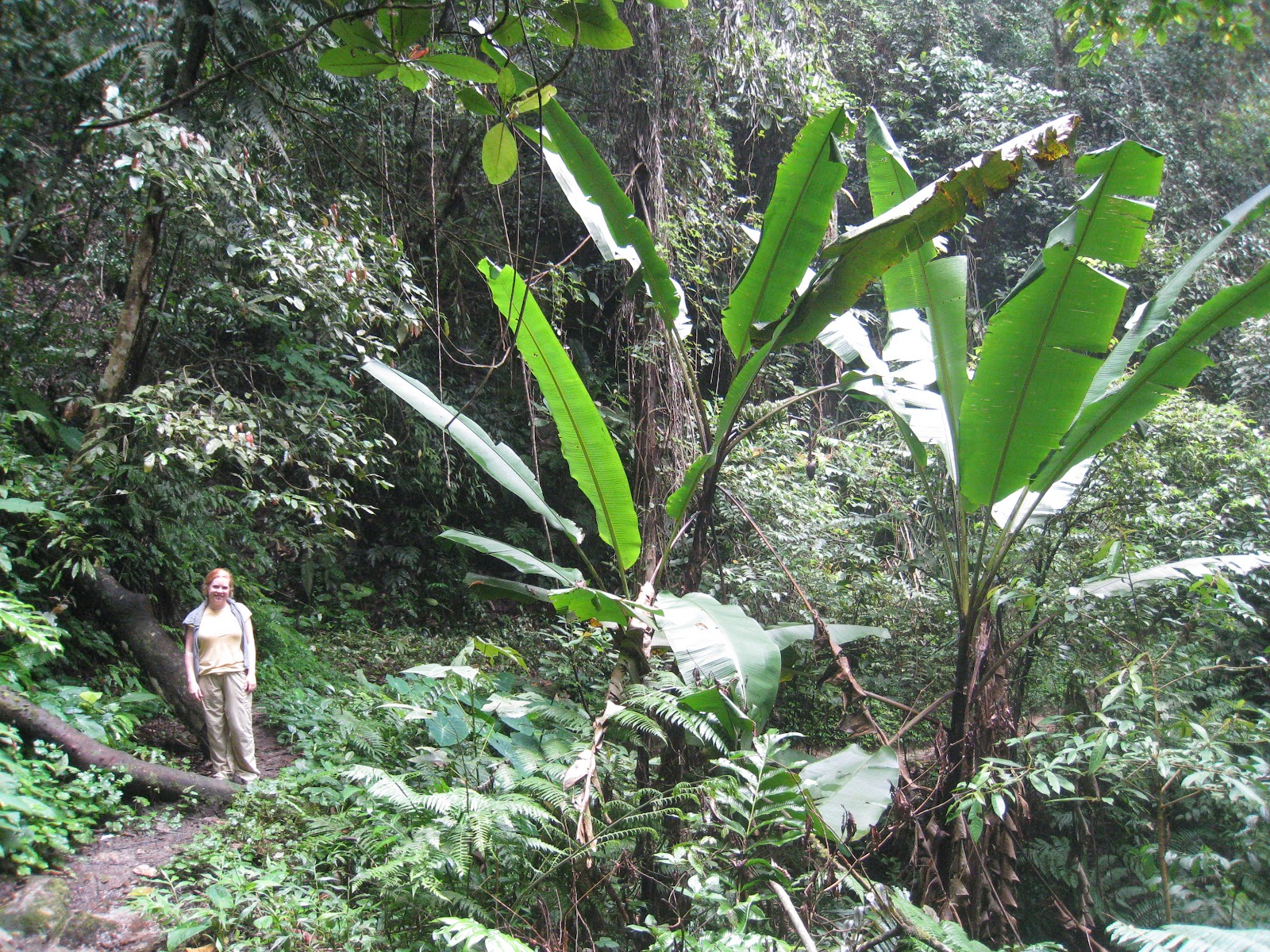
From our home base we went on a jungle trek (billed as a walking path), visited the Boh Tea Plantation, and ate the best darn banana pancake we've ever had.  The jungle trek involved climbing over fallen trees, pushing back overgrowth, routinely checking Annette's hair for phantom spiders, and getting really, really muddy from the waist down.  Once done with walking path # 9 (the biggest lie of a title since "Funny People") we walked for another hour and a half up a road to visit a tea plantation.  The Cameron Highlands are known for strawberry farms and tea plantations.  We didn't buy any of the horrible strawberry-themed souvenirs or visit any S-berry farms, but we did sip lovely Boh tea while munching on deee-lightful scones overlooking some beautimus hills covered in tea bushes.  After a self-guided tour of the facilities and a walk up to a stunning viewpoint we pointed ourselves downhill for a 4 hour walk home.  We kept our thumbs out, hoping to hitch a ride but we weren't sure what to expect.  We had only ever hitch hiked one other time between the two of us and, although we saw other hitchers zipping past us with their benefactors, we didn't really know how white hitchers were treated in Malaysia.

We walked for what felt like forever, but was probably only a half an hour or so, with Annette cursing every car that didn't stop but might have had a seat.  Finally we got picked up by the people who were meant to pick us up.  Let us explain: 

The family that scooped us up consisted of a mother, father, a three year-old boy, two twin girls (aged 7), and a grandma visiting for the day from Kuala Lumpur.  The mother spoke really good English and translated much of our conversation to the grandma and pops, who would ask us questions through her.  Pops seemed especially  curious about certain parts of our lives and travels.  Most of his questions came when we passed other white folks walking along the road and he would query through his wife, "Are they friends of yours?"  We rode and chatted (and pulled over at a view point for a photo-op) with this amazingly nice family for about 45 minutes.  We learned a little about them and they seemed to enjoy every little detail we shared about ourselves.  As in Korea, all the adults nodded approvingly and made corresponding sounds of approval when we mentioned we were married.  The mother in particular had a sweet smile and way about her.  We jumped out of the car feeling warm all over after we got into Tanah Rata.  We talked giddily about the experience and how little moments like the one we just finished with really helped illuminate new countries for us.  Enriched.  We both felt enriched.  We chattered this way for the next 15 minutes or so as we shopped on the main street.  We stopped only when interrupted by pops, who stood up and greeted us from his dinner table.  Before we knew it we were sitting with our family as they ate dinner (we declined their offer to buy us dinner) and we sipped teh terrik (which they did buy for us).  We chatted with them more about our lives and learned more about theirs: Mom is a stay at home mom, dad works at a hospital, and the kids don't like to sit still for long.

The Cameron Highlands were really pretty.  We ate some great food there (including two breakfasts from the deaf and insanely warm super husband and wife team located in a string of stalls near our guesthouse, the Twin Pines-pantomiming back and forth with them was another highlight of the CHs) and soaked in some really spectacular countryside.  But to us, Cameron Highlands will always stand out in our memories as the place we connected with a beautiful and kind family.  We'll remember coming to the highlands liking Malaysia for things and leaving loving the country for its honest, sincere, heartfelt people.


Penang and Melaka: Brilliant (and Delicious) Bookends for Malaysia

We didn't know much about Malaysia before we went and like South Korea, this fact turned out to be an advantage.  We visited Japan and China with plenty of expectations about their people, cultures, food, land, and other aspects.  Malaysia, on the other hand, was more of a mystery and we think our lack of expectations helped make our three weeks there that much more special.  There wasn't much we didn't like about Malaysia, but two of our favorite places happened to be the first and last areas we visited: Penang and Melaka.

Penang is a small island just off Malaysia's west coast, barely south of the Thailand border.  Penang's main tourist attraction is the city of Georgetown.  At first glance Georgetown is a decrepit and crumbling city, desolate and bleak.  Further inspection reveals hidden charms in the forms of diverse architecture and temples, rich cultural history, friendly people, and amazing food. Penang's diversity makes its food utterly awesome and the island a fascinating place to explore.  We meandered streets boasting Portuguese, British, Chinese, Indian (Hindu), Chinese, and Malay influences while we munched food with roots in almost all of the same places.  It is almost impossible to describe here the nirvana achieved when we took our first bites of a magical coconut tart we found a bit off the beaten path. These things were invented by the current baker's father and are different (by leaps and bounds) from the other coconut tarts we found in Malaysia. You have to weave your way through a few side streets and alleys and into a place called "People's Court," which is more like a dilapidated parking lot perched in the center of some very rundown and grotty looking apartment buildings, to get to this baking wizard, but once you do the payoff is huge.  We went back two more times after our first visit and never got sick of the tarts. Trying to describe how these tarts taste in writing would be like attempting bake a cake to convey the beauty of the Sistine Chapel. So we guess to really experience these tarts, you'll just have to go to Penang yourself!  (Jeff contends that these tarts are the best thing he has eaten over the course of our entire adventure!)

The other, more traditionally Malay, Chinese, and Indian food we experienced in Penang was fantastic, too. We shoved roti (described on English menus as "Indian Bread"), teh terrik (literally "Tea Pulled"), coffee (like the teh terrik, Malay coffee is served pre-melded with sweetened condensed milk[!]), kaya toast (kaya is a Malay jam made with eggs, coconut, and sugar), samosas, and many other very bad-for us, but very delicious street food delights.  We ate mainly from small stalls and street carts while we meandered the city gawking at temples, warming to nearly toppled buildings, and learning some Malay history. 

We ventured out of the city one day to inspect an enormous temple on a nearby hill.  The temple is known for its striking architecture, but we marveled at the pond filled with turtles down below.  The pond is populated by turtles released by locals.  By releasing a turtle into the pond, one is said to be letting go of the past and hoping for a bright future.  Apparently, a lot of residents have let the past go, because the pond is almost overflowing with turtles! 

The sights in Penang and Georgetown were interesting (especially a "lodge" built by a Chinese clan society similar to the Knights of Columbus with obvious Indian and Malay influences in the architecture), but we found ourselves always drawn back to the food.  After the hillside temple we immediately tried our first (but not our last) ais kacang, a Malay sweet treat consisting of ice cream, shaved ice, flavored syrups, corn, jellies, and red beans.  Ais kacang was far, far better than it sounds and we tried it again, despite the fact that it sounds like ice cream and shaved ice mixed with the findings of someone's trash bin.  Indeed, Penang lived up to its reputation as having the best food in Malaysia.  We were introduced to many of what later became our favorite things to eat in Malaysia. 

We took what we learned about Malaysian food in Georgetown and promptly ate our way in a zig-zag pattern down the country.  Our feast ended (appropriately) in Melaka, another fantastic food city and a town we enjoyed very much.  Melaka had it's ignored and crumbling bits just like Penang, but it had more tourists (carted in by the busload) and shine in it's tourist center.  We (happily) stayed outside of Melaka's center and, as a result, enjoyed some less touristy pursuits: We saw two movies (each less than $3 per person[!]), Jeff played pop-a-shot at an arcade neighboring the movie theater, we enjoyed brightly flavored doughnuts a-la America's cupcake trend on an expansive lawn with locals, walked to a beachless-shore lacking any other white faces, and toured an old restored Dutch shop/home with a friendly and super-informative guide (who we could tell was itching for someone - anyone - to stop by his brilliant, but empty restored home).  We also saw a five-foot water monitor lizard in the sewers through the bars of a storm drain.  The man chopping up chickens behind the restaurant fronting the drain smiled widely and told us that the lizard comes by every morning, around the same time.  He made this statement as he tossed chicken bits down to the hungry maw of the animal. (!)

The main sights in Melaka included a batch of red British colonial buildings, a bustling Chinatown, and some ruins on a hill.  But the main event was Annette's first meeting with rojak (a delicious fruit and vegetable salad covered with a sweet and salty sauce).  Annette declares rojak as one of her favorite things we have eaten on our trip so far!  The same place we ate rojak also featured an old lady making banana leaf-wrapped rice pyramids using blue rice.  The same lady also whipped us up a Malaysian burrito called poppiah, which was almost as good as the rojak.  Jeff loved the poppiah and the rojak, but the most memorable food moments for Jeff were trying the disgusting, but edible-enough looking, durian cream puffs and eating dinner with some friends we ran into who we met in Kuala Lumpur.  The best part about the impromptu double date was that the fella, Dimitri from Canada, and Jeff could make jokes about the food all night since we decided to try the local specialty of chicken balls.  How marvelous!

All in all, Penang and Malaka left a very tasty impression on us both.  But wait!  Our love affair with Malaysia continues in our next post, the Cameron Highlands!


Monday, August 29, 2011

We're back from the Outback!

We just completed a two week drive from Darwin to Alice Springs and have returned to civilization in Adelaide.

We are uploading photos on our Picasa album as we write this and just updated the Oh, The Places We've Been page.  Check out what where we've been while we whip up some new posts and try to catch up to the present!

We also wanted to take this opportunity to shout out all of you who have been reading and commenting on the blog.  We really appreciate all of you who take the time to read, and especially those who take even more to comment.  (All of your comments have been wonderful, but special honors must go to professor Toby Geotz for his comment on our Penis Park post from Korea. Just marvelous!)

Coming soon: Penang and Melaka; The Cameron Highlands; The Perhentians; Kuala Lumpur; Singapore: City of Food; and Brisbane: The City We Would Move to if it Wasn't Half Way Around the World from our Friends and Families.

Thank you all again for reading and traveling along with us in spirit and we look forward to catching you up!

Saturday, August 13, 2011

Pool or Beach?

You know you are doing something right when your most difficult question to answer over the course of a week is, "Pool or beach?"

That is where we found ourselves during the second half of our first stint in Thailand.  We  moved from one resort to another (this second one was more a resort than the first, though) and found ourselves with, happily, very little to do.  We went out on two fun-dives (a dive for no credit toward moving up the PADI certification ladder) and they were two of our favorites on Koh Tao, mostly because we were more comfortable with what we were doing and could focus on the fish and coral and rays, rather than the skills and trying not to drown.

Beyond the two dives, we watched a new DVD almost every night ($2 at the good ol' black market DVD shop--Holla!!) and chilled out a lot. The chillage was supposed to be simple:  Go to the beach, snorkel, get hot, repeat.  But this fancy-pants second resort decided to complicate our already over-stressed lives by adding an obstacle in the form of a pool.  This pool was slick, infinite, and nestled awesomely beneath a small cluster of swaying palms.  The beach was small and private.  But the pool was clean and super cool looking.  It was slightly raised from the ground, black, and looked as if it belonged at a billionaire's home in the Hollywood hills.  The chairs were more comfortable at the pool and it was the perfect depth for handstands.  Our everyday chore of deciding whether to hang at the beach or pool (first) was really a tough one.  Ugh!

While the food at this second resort was inferior to the first, the rooms were all little cabin-esque bungalows that were private, roomy, and homey.  They let in giant spiders and cockroaches, but they also let in the sound of the ocean and felt just plain goooooood.  Not much more to say - nice rooms, fantastic service, comfortable beds, amazing beaches, and beautiful tropical surroundings.  We spent almost two weeks in paradise and loved every minute of it.  We felt the hurry and grime and edge of China slip off us, but the memories and experiences that taught us so much about a culture so much different than ours stayed with us even was we roasted on the beach and cooled off in the pool.  We left Thailand with renewed energy, diving certifications, and a little less tension in our shoulders. China is all about balance - the yin and the yang.  But Thailand is where we really found ours as we managed to get the pool to beach ratio right before we had to catch a boat to a bus to the train that would take us to the surprise hit of our trip - Malaysia!


Note:
Although the pool was pretty awesome, we did see an octopus while snorkeling off the beach (as well as a shark!) and we also witnessed the cutest most randomly funny moment of our trip there.

A couple was walking on the beach after a big snorkeling session.  They each had on a mask and life jacket and were carrying their fins.  A little naked Thai boy (presumably a local, as he had been swimming with mom and dad) came up out of the water and approached the woman with the snorkel gear.  The boy, probably between three and four years old, grabbed the surprised girl's fins.  Pretty quickly he made clear that he wanted all of her gear and before we knew it he had her mask, fins, and life jacket on (as best he could, bless his little heart) and was trying to enter the water with it.  The couple, mom, dad, and us all had a good laugh as the boy tried the gear in the water for a total of ten seconds after five minutes of getting the stuff on and gave it all back.  How marvelous!


Learning to Dive in Thailand

China kicked our butts.  And because Annette is a genius, we planned for total post-China exhaustion.  Our solution was to schedule a vacation from our "vacation" immediately following our month in China.  Annette knew even before we left Seattle that if we would ever need a break from our travels to re-energize and get our minds right, it would be after China.  We flew directly from Hong Kong to a small island called Koh Samui.  We slept at a pleasant beach-side resort on Samui for one night and caught a ferry the next morning for the smaller, beginning-diver mecca Koh Tao.  Samui and Tao are two of three islands in an idyllic string
just off Thailand's Eastern peninsular coast. Samui is the glitziest, most resorty island of the trifecta, while the

third, Koh Phagn Nagn, is famous for it's bohemian party scene and ultra-hedonistic full moon parties.  We
Too much scuba time in the pool!
skipped the more expensive (for Thailand) Samui and the party-tastic Nagn and headed straight for Tao, the smallest and most laid-back of the three.  We chose Koh Tao because it is known as one of the best places to get dive certified in the world.  We spent our first five days on the island learning to dive (four dives, hours of classroom time, several tests, and a practice run in a swimming pool all over the course of four days).

The combination of several good dive sights near by, low cost, and high quality and safety standards (due to the saturation of dive schools) has made Koh Tao a very popular stop for travelers and backpackers.  We met more than a few people who had learned to dive on Koh Tao five or six years ago, so the island really has made a name for itself.  We both enjoy snorkeling, and since we would be spending so much of the next few months in areas known for their excellent diving, we took this opportunity to strap on our wetsuits and give it a go!  The Great Barrier Reef, Malaysia (though we didn't know it yet), and Vietnam were all calling for us to come dive their tranquil and bountiful waters.  The first step to taking in underwater sights along our journey was to get what is called the Open Water Dive Certification from PADI (Professional Association of Diving Instructors).  The Open Water Certification allows a diver to dive up to 18 meters alone (though one would normally have a dive leader in new areas).

There was nothing particularly difficult about learning to dive on Koh Tao -- everything from choosing a shop to mastering the basic skills of operating the equipment and a few emergency skills was fairly easy.  As far as dive school selection goes, the choices ranged from large or small, closer to where we were staying or slightly further.  Since all the prices were the same for most schools, we went with size.  We wanted a larger, well-established shop where we would feel comfortable and figured safety would be a priority.  (Man, we are so not backpackers sometimes...!)  We went with a school called Crystal that has a good reputation, and reasonable class sizes even though it is one of the largest schools on the island.  Our instructor was a friendly Israeli with a quick tongue and good sense of humor named Liran.  Liran was patient, clear, and experienced.  Although he could have spent more one-on-one time with each student (not his fault since he had five ), Leron was a good instructor and we walked away from the class feeling pretty confident in our basic skills. 

Our favorite Liran-ism was, "Pump up the dolphin," which was his way of reminding us to pump air into our BCDs (buoyancy control device) when we entered the water.  His, apparently, made a sound like a dolphin when it was over-filled in the water.  Liran also had a really funny way of describing the underwater hand signals, though those are more difficult to describe in writing.  The one that struck us was his super-slow-mo explanation of telling your buddy you were out of air and needed to share air. "Budd-ee," he would say as he ran through the motions. "I. Am. Out. Of. Air. I. Need. To. Share. Your. Air."  We're not sure why, but the way Liran said and motioned this particular set of signals stuck with us vividly (and comically).  So cheers to him!

We also learned how to find our regulator if it should get pulled from our mouths, flood and clear our masks, remove and replace our masks, some basic navigation, and how not to die by surfacing too quickly (this one is pretty important, apparently).  Getting into the water for the first time and descending with all our gear was a trip.  There was something special about swimming side by side and eye to eye with the fish.  The first few dives lacked much aquatic life of interest, but they were neat since everything was brand new.  And it was super sweet to pause and think, "Hey, I'm freaking breathing underwater right now!" 

***

We don't have many photos from our first five days on Tao, but some highlights were:


Splashing in the ocean a few ours after our arrival on Samui that first day.


Lounging on the beach of our very pretty resort (we use that term loosely here) - Charm Churee Villas.


Getting our dive certification after four days of hard work and the most time in a classroom either of us has had since 2007.


The fruit and other goodies at our pretty swell buffet Charm Churee breakfast.


Our own room complete with king bed and humongous balcony!!


Making friends with our fellow divers from our class - including a hilarious couple from Seattle (by way of Detroit ["They took our jobs!])."

(There was also a couple from Scotland and the gentleman, Ally, kept trying to show everyone photos of himself in a kilt. Yes!  And guess what?  They really wear nothing underneath!!)

Monday, July 25, 2011

Heart of Darkness

We have a friend who traveled the world for over a year.  He reported that he felt closed off and alienated when he got home.  He was distrustful of almost everyone and found it very difficult to merge back into any sort of normal routine.  He spent almost his first full year at college in Bellingham just re-adapting to socializing with his peers.  He often tried to explain it better, but he couldn't really.  He just said he felt like it was really hard to connect with anyone.  He felt like he had hardened as he traveled.  It was as if he became more and more like the worst parts of the people he encountered.  We think we got a brief glimpse of what our friend was talking about during our time in China. 

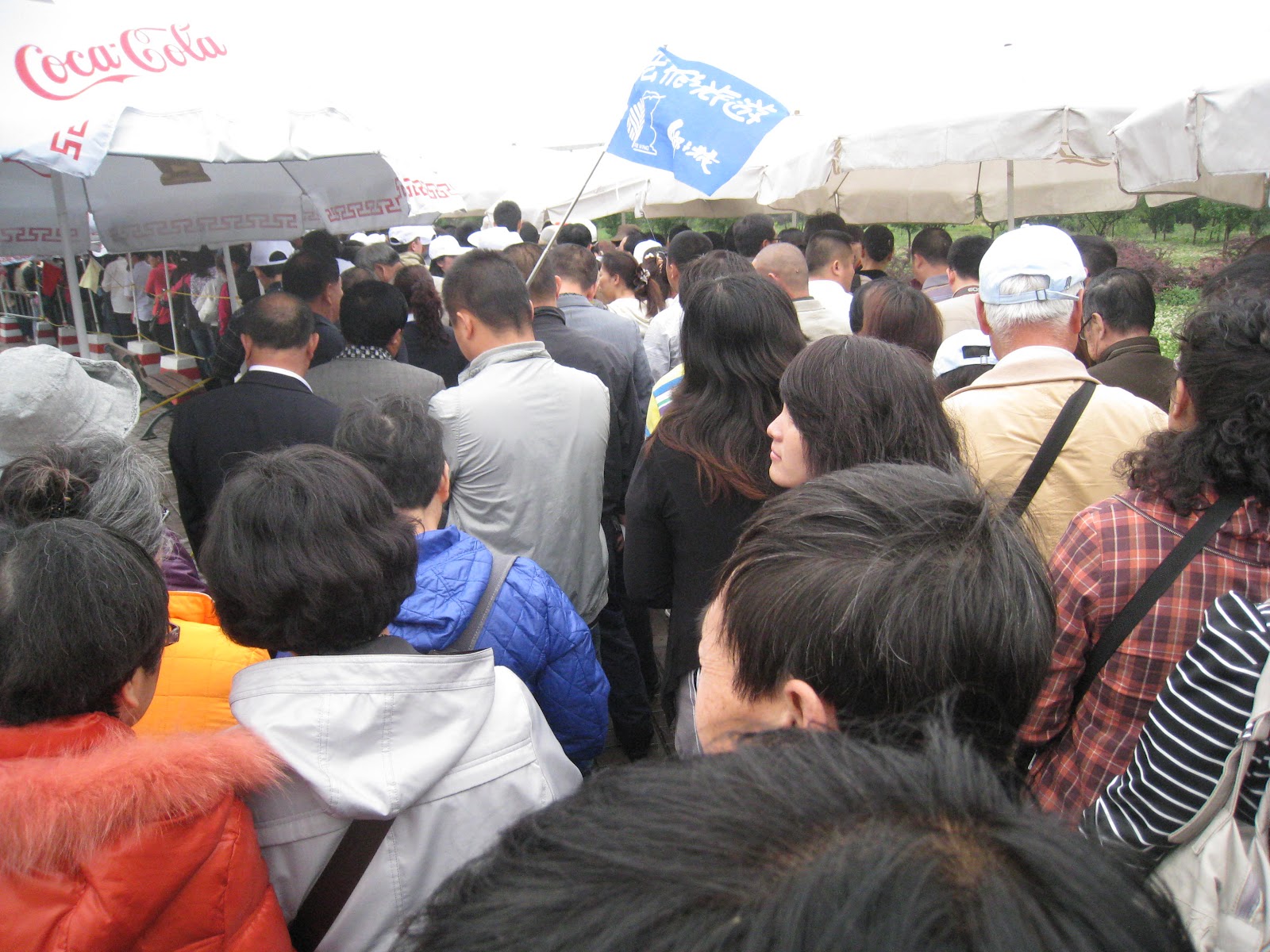
We were startled at first by the directness and seemingly inconsiderate behavior we witnessed in China.  Certain behaviors felt socially unacceptable to us because of the emphasis on manners and politeness we are taught at an early age, but these behaviors are just how Chinese culture is - it isn't bad, just different.  We were unnerved by the elbows thrown into our backs in subway stations and at popular sights.  We were surprised to watch person after person cut directly to the front of the line at the Beijing West train station.  We often looked at each other, startled, as someone nearby hacked and hacked and hacked until they finally spit loudly and triumphantly onto the sidewalk.  We watched in horror as people casually dropped trash in the street or unloaded piles of garbage into potted trees.  But those were our early days in China.  We never really got used to the hacking, and we never littered (or had to since trash bins were more readily available in China than in Japan, go figure), but soon enough we were shoving our way onto buses and metros.  We often caught ourselves edging people out of the way or pushing innocent bystanders as we walked in crowded areas or queued up for something.  We had to fight fire with fire.  If we didn't push back we would have been bowled over.

Then again, that isn't us.  We would look at each other in shock after one of us pushed our way onto a train, as we often didn't even realize what we had done until after the crime had been committed.  Annette was shocked to see Jeff snap at several hawkers.  He would always feel bad after and vow not to menace at them in the future, but in the heat of the moment some new instinct would just kick in. 

Jeff started referring to such moments as the Heart of Darkness.  Jeff's literary reference is to the 1899 James Conrad novella, The Heart of Darkness, which is, in short, about how a new land can contort and twist one's nature and intentions.  We wouldn't think about our behavior, we would just do as the people around us did, which often meant becoming more rude (from a Western perspective), more physical within crowds, and totally self-centered in regards to strangers.  It was freaky to notice ourselves becoming more and more like the parts we liked (or understood) least about China and the culture.  And the constant barrage of hawkers trying to sell us things and touts trying to take us to hotels and guest houses didn't help either.  The walls went up quickly and were hard to take down.

As we have noted before, there was so much we liked about Chinese culture.  It may have been our favorite country we've visited so far because it was so different from what we are used to and comfortable with.  We are glad that we can talk and remember fondly now the best parts about Chinese culture (the bond between families, genuine kindness, the subtle and remarkable ebb and flow of the massive human machine, and the focus on family and friendships as a healthy foundation, to name a few) changed our perspectives and enlightened us to another way of living.  We are thankful to have been able to visit and experience China, and we apologize to any locals or tourists we may have pushed, cut in front of, ignored, or just plain walked over - It is easy to lose yourself in the Heart of Darkness.


Up Next: Thailand!!

Saturday, July 23, 2011

Interlude

We want to take a moment to share a few photos with you. Consider this an interlude, if you will.

In-ter-lude
–noun
1. an intervening episode, period, space, etc.
We mentioned in our Yangshuo post that we were frequently photographed by Chinese tourists while we toured that great land.  Sadly, we have only a small fraction of the actual number taken, but we wanted to share the few we did manage to snap of these precious little moments.
  

Enjoy!


Bonus Shot!

This gem is of a crowd of Chinese tourists gathered around a little white girl (patient mother not pictured).
Interlude concluded.

Next up:  Our last china post, Heart of Darkness