Search J & A Abroad

Monday, November 21, 2011

Halong Bay

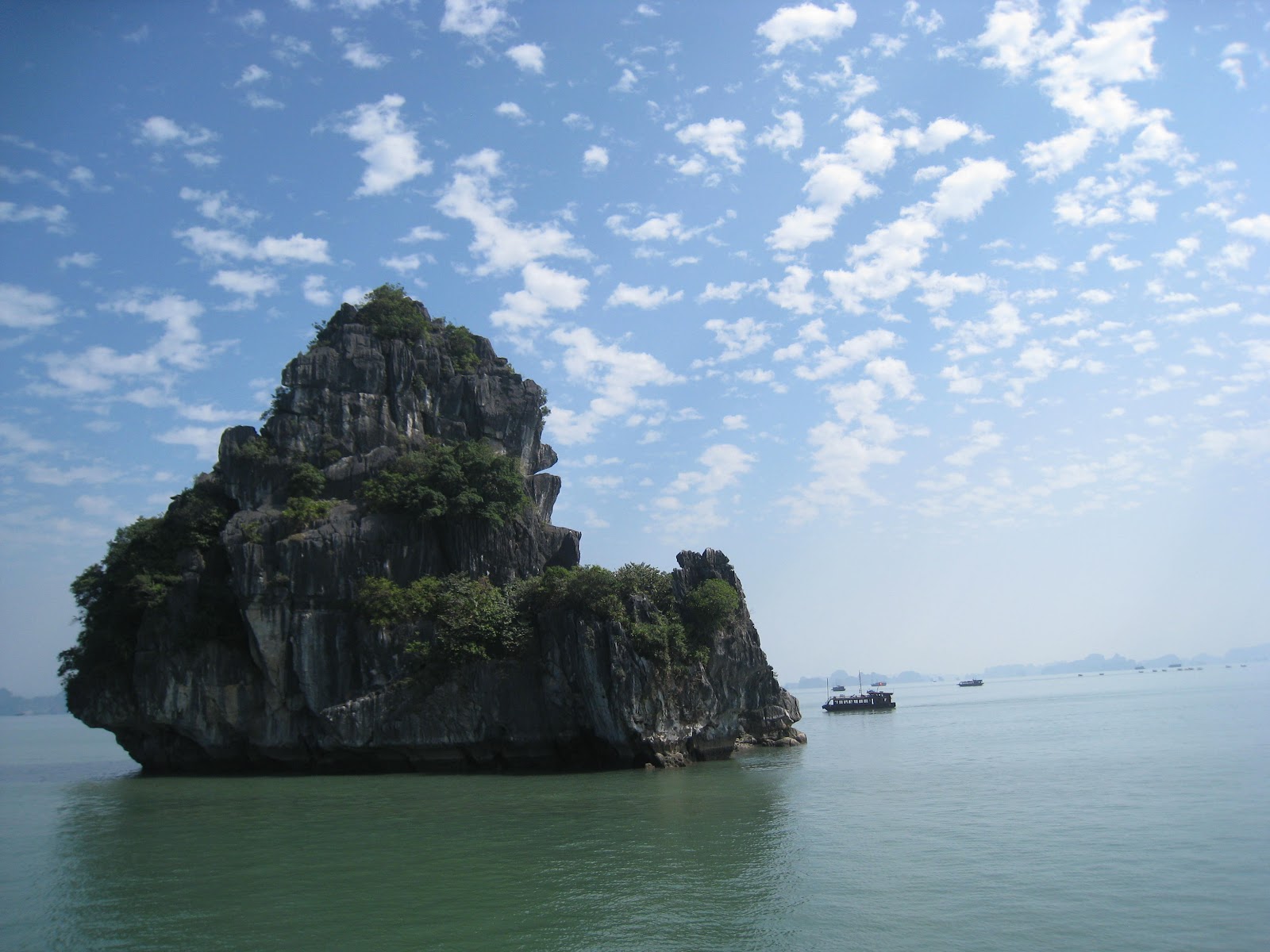
The number one reason to go to Vietnam is to visit Halong Bay.  Over 5 million people a year see the bay, but the sheer number of tourists (we went during a slower season) didn't harsh our Halong high at all.  The limestone karst formations that spring up from the bay's emerald waters never get boring, and to swim under and among them was an experience we won't soon forget.  The organized tour we took to Halong with had some issues, but no glitches or hiccups or delays could take away from the raw awesome that is Halong Bay.  Our tour spent the first day and night (of a total three day, two night package) in nearby Bai Tu Long bay.
Bai Tu Long Bay
BTL (as we'll call it) was less spectacular, but also way (way) less crowded.  The peacefulness of floating on a small boat amongst some still beautiful rocks and islands was undeniable and the fact that we didn't see a single other tourist made our whole experience that much better.  We had read that BTL was just as amazing as Halong, which is an untruth!  It is really pretty and beautiful in its own way, but Halong has a presence that BTL can't match.  There are huge (and we mean HUGE) bolts of rock springing up everywhere you look, often taking on mystical and intriguing shapes.  Halong at sunset was a whole other level of splendid.

Fishing Boats in BTL
We didn't go to a lot of the caves, floating villages, and famous formations of Halong.  But we liked it that way.  There were a lot of other boats around, but a late start to our first Halong day and a less structured sailing itinerary meant that we were able to swim off the boat alone and just relax, soaking in one of the most beautiful places on earth.


Our excellent guide, Mimi


Saturday, November 19, 2011

Sapa

Men at the water buffalo market
Just a night train (and a windy mini-bus) ride away from Hanoi lies the cozy, resort-style mountain town of Sapa.  This is the place to trek to meet Vietnam's ethnic minorities, eat Western versions of Vietnamese classics (and a few undiscovered delights), and to explore surrounding villages and markets.

We spent one day in Bac Ha, a small town known for its Sunday market.  This market was unlike anything we had ever seen before.  Every Sunday, villagers from the surrounding hill tribes make the trek into the "big city" to sell their wares, buy or sell livestock, and stock up on everyday items.  Aside from the typical offerings of hardware, clothes,
Bac Ha market in full swing
produce, freshly slaughtered meat, and the odd souvenir stall, this market also had an extensive livestock section with dogs, pigs (more than a few of which we saw unhappily tied to a motorbike), chickens, horses, and water buffalo.  What also set this market apart from so many others is the colorful presence of the beautifully dressed Flower H'Mong.  One young lady pinched Annette's arm and brushed it a few times with her index finger to make sure that her pale skin was real (we think).  Even as she did so, we wanted to pinch ourselves to make sure we weren't dreaming, as the vivid colors and swirling energy made the market feel wonderfully surreal.


A Flower H'Mong woman rubs Annette's arm, surprised by her white skin

Water buffalo at Bac Ha market


Most people who visit Sapa do so to go trekking to small minority mountain villages, all surrounded by lush forest and unbelievable rice terraces, so we jumped on the bandwagon and signed up for a trek.  There are two treks you can sign up for at Sapa's excellent information office, and we chose the route less traveled by tourists.  Good choice!  We saw less than ten Westerners all day and were treated to the attention of villagers who had not yet been desensitized to the sight of tourists.

The little girl in front was the leader of these three attention-lovers

Our guide Tze and her three friendly, sales-lady friends
In the town of Sapa H'Mong women follow tourists everywhere joking and pleading for them to "Buy something from me."  We had three lovely and smile-prone ladies follow us for the first three hours of our trek.  They didn't try to sell us one thing until we sat sown for lunch.  We bought a few items and they threw in a photo shoot, four woven bracelets, and three grass horses for free.

Some of our favorite moments on our journey have been the ones we don't expect.  We didn't expect, for example, to spend half an hour in a H'Mong house in a tiny village outside of Sapa.  But our guide, Tze, finished our five hour guided trek at her home, where we were entertained by her three beautiful children and six puppies.  The entire trek was memorable because of the playful and curious children, enchanting scenery, and our lovely guide.  But the opportunity to have a conversation with her in her home (while playing some version of tag that involved the children trying to run by Jeff without being touched) was truly special.

"Don't-get-touched-by-the-foreigner" tag
We and Tze make three

Hanoi!(!!!!!!)

The capital of Vietnam is billed in our Lonely Planet guidebook as being an amazing, adrenaline filled blend of old Asia and the modern world, and we have to agree.  Hanoi's Old Quarter is one of the most energetic and frantic and intense places we have ever been!  The sidewalks are mostly unusable by pedestrians because businesses spill out of the buildings and parked motorbikes fill up precious space.  The roads everywhere in Hanoi, but especially in the Old Quarter, are to be crossed and walked in at your own risk (just go for it, look straight ahead, and keep a steady pace and traffic will move around you...).  From about six in the morning until about eleven thirty at night the non-stop din of car and motorbike horns act as an underlying soundtrack, for better or worse (mostly worse). 

Although that all sounds pretty terrible, Hanoi has some strange vibrant energy that makes it feel alive in all the best ways.  Hanoi gets your pulse up, brings delicious food to your mouth, exciting sounds and sights to your ears and eyes, and reminds you why you wanted to visit Vietnam in the first place.  The motorbike culture in Hanoi is insane - everyone seems to have one, and if someone doesn't they are probably riding (possibly with a few kids or some packages, or both) with someone who does.  A motorbike loaded with stuff was almost as common a site in Hanoi as one loaded with a family of four, kids and all.  Cars can't maneuver like motorbikes, which makes crossing the street safer and more terrifying all at once.  There is something about all those bikes and scooters that make Hanoi roads seem more alive and crazy and artful and dangerous all at once. The Old Quarter of Hanoi could be frustrating to walk in sometimes, but we both mainly felt energized from the constant swell of the city.

Hanoi-style noodles sans broth - to be dipped in a delicious sauce
Jeff became obsessed with what and where we would eat while in Hanoi to the point where all Annette wanted to do was shove a crusty Banh Mi into his mouth to get him to shut up.  Jeff calmed down as we got to know the city better and figured out that new, interesting, challenging, and exciting food is as easy to find in Hanoi as a honking motorbike.  We ate at several of the sidewalk "restaurants," where we sat on little plastic stools (which are everywhere in Vietnam).  We dined at a very cool non-profit restaurant, called Know One Teach One (or KOTO, for short), that gives street kids a chance to learn and succeed in the restaurant business.  We tried some Indian food (awesome everywhere in SE Asia, we swear to Buddha) and cafes and everything in-between.  Banh Mi? Check.  Pho?  Check.  Mystery pork dish with the lunch crowd on a random street we don't know where?  Check.  Home-brewed beer at a couple of different Bia Hoi joints?  Oh, double check!

While the exploring Vietnamese cuisine was a big part of our Hanoi experience, we did actually get out and do a few things.  The obligatory just-for-tourists water puppetry show was actually pretty neat, and mercifully short.  Water puppetry is an ancient art in Vietnam, originating in the flooded rice paddies of the country's rural farming areas.  The little wooden puppets are brought to life by hidden masters and a live band belts out songs and solos.  The uses of a pool of water as a stage allows for some interesting acts, such as the floating candle ladies and horses jumping through a ring of fire.  But mostly the water is great for entrances and exits!

A (non-food) highlight for us was the newly renovated but under-visited Women's Museum, which had several really good exhibits detailing the daily lives, struggles, history, and future of women in Vietnam.  We connected with the often difficult and always amazing lives of many Vietnamese women, from all walks of life - activists, famous figures from the American and French wars, single mothers finding their way in rough circumstances, and the cultures and practices of many of Vietnam's ethnic minorities.


We were both a little timid about Hanoi before we arrived.  It has a reputation for being fast and rough.  But we both liked it a lot more than we anticipated.  We often found the traffic and constant threat of being wounded by a motorbike more thrilling than obnoxious or frightening, and the city's raw energy (and amazing flower pant-suits worn by nearly every woman over 45 or 50) drew us in and held us captive for our entire time there.  Perhaps Hanoi would have broken us if we hadn't already spent a month in China, but as it was, we really enjoyed the honesty and kind-hearted chaos that was Hanoi.


Friday, November 18, 2011

Travel Daze: Two buses and a Boat, and Nong Khiau for Bonus Points

The standard two to three week falang tour through Laos is pretty set:  Vientiane, Luang Prabang, and Luang Nam Tha. 

The route between the main Laos destinations, while similarly set, can be free-styled upon a little bit.  For fun, we thought we'd share with you how we got around:


> We entered Laos at the Huay Xai border with Thailand by boat (5 minutes).

> Bus from Huay Xai to Luang Nam Tha (5 hours).

> Luang Nam Tha to Nong Khiaw by bus (about 7 hours).  The extra-slow paced Nong Khiaw had beautiful karst mountains, a river, a few falang outposts for eating and sleeping, lazy hammocks, a bridge, and not much else.  Paradise?

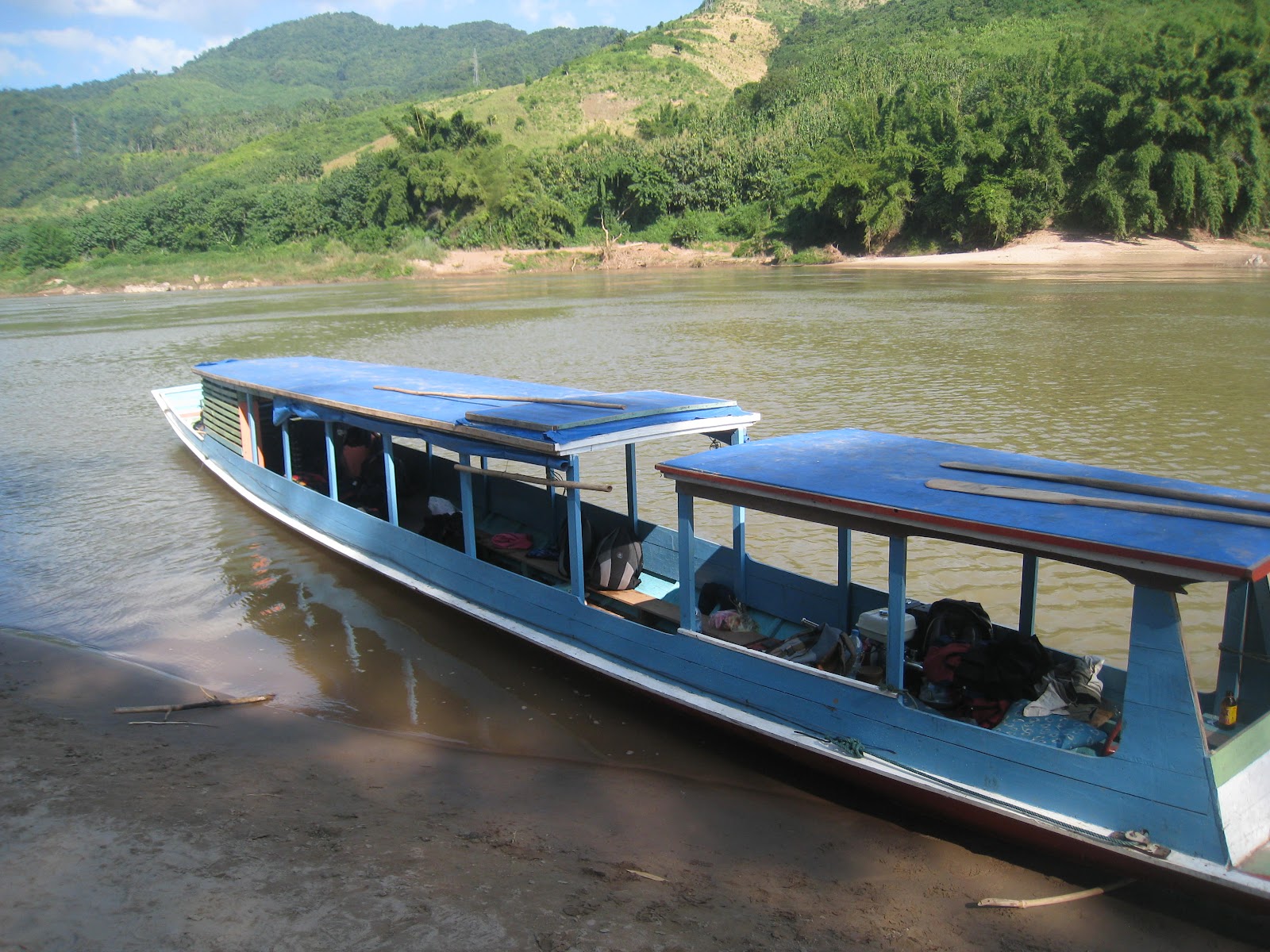
> Scenic boat ride from Nong Khiaw to Luang Prabang, below stunning karst mountains and past villagers fishing and children bathing (about 6.5 hours on a low, wooden bench).

> Rough and winding roads for most of a nearly 12 hour (yes, that's TWELVE HOUR!!) bus ride from Luang Prabang to Vientiane.

> Flight out of the pleasant Vientiane international airport to Hanoi (the flight was just over an hour, but take off was delayed without reason or notice for nearly an hour).

Vientiane: The Chillinest Capital City in SE Asia

Note:  We have just two weeks before we come home!  And we have this ridiculous notion that we'll be able to catch our blog up to date before we board our December 2nd flight in Bangkok.  We still want the posts to be good, but we're going to try to pack more into each post.  Hope you still enjoy the ride!
Enjoying b-fast at the Scandinavian Bakery
Even with just over 750,000 people, Vientiane feels more like a small, dusty town than a capital in SE Asia.  Friendly, relaxed, and compact, Vientiane turned out to be one of Jeff's favorite cities in SE Asia.  It had a certain level of quirk and authenticity you only get in a city that hasn't fully erupted with a full-fledged tourist boom yet.  There are good hotels and restaurants (including some wonderful cafes, like the Scandinavian Bakery, which we visited twice) and shops aimed at tourists, but Vientiane didn't have the same phoney gloss that made Luang Prabang feel at times like it could be any city in Western Europe.  LP had its own charms and little nuances that set it apart in the end, but Vientiane had a perfect blend of Western comforts and unspoiled Laos style that made it unique to many of the cities and towns on the beaten SE Asia trail - also known as the "Banana Pancake Trail." 

Even Buddha takes it easy in Laos
The Buddha Park outside of town, provided a nice half day trip and lots of photo opportunities.  The Buddha park itself is only about 60 years old, but since all of the sculptures are made out of concrete the place looks ancient.  The combination of Muslim, Hindu, and Buddhist symbolism made for some very interesting sculptures!  An unexpected bonus at the park were the few young Laotian men who genuinely want to practice their English with us.  Jeff was approached by three total, and was initially dubious, but the Buddha park has become a popular place for English practice, as the tourists in town are too wary of strangers (due to hard sells on everything from tuk tuk rides to marijuana).  Jeff had two great conversations with these friendly young fellows, and even started corresponding by email with Lar (pronounced La-a), a young monk hoping to go to university in Australia or the US.  Apparently there is a very difficult English test that can make or break a young Laotian's hopes of going to university abroad and it was cool to chat with them and try to help them pass their tests.

There is a large expat community in Vientiane (well, it felt large since we saw them everywhere and ate at their restaurants), which made for some excellent eating.  But the food in Vientiane was a (distant) second place behind the few hours we spent at a temple outside the city.  We biked four kilometers to Wat Sok Pa Luang, often referred to as the forest temple, and the calm, green setting was welcome indeed.  We attended a meditation session, where we learned about and attempted to partake in some Vipassana meditation - a meditation style of monks and nuns all across Laos.  Our Vipassana session consisted of three parts: a sitting meditation and a walking meditation, finished with another sitting meditation.  Each of the three parts are twenty minutes, their end signaled by a small gong.  We found, unsurprisingly, that clearing our minds was extremely difficult.  Jeff found that the act of walking helped, which he didn't expect.  We were instructed to focus only on each step we took.  Having a task maybe helped Jeff clear the rest of the rubbish out of his skull.   We found the practice, overall goal, and teachings helpful, difficult, and totally rewarding.  We could really see, even from just that one session, how beneficial meditation could be to us both.  We were also lucky enough to have the founder of these weekly sessions, held every Sunday and open to foreigners, with us that day.  She was an old nun who, with the help of an interpreter, answered some questions and talked a bit about why she thinks meditation and Buddhism are so important.  

Also at Wat Sok Pa Luang, we got some traditional Laos massages.  The messages were a little like paying to get mugged, but Jeff really liked the back-cracking and rough stuff.  Annette was less of a fan, but her lady did hit a few really nice notes between handing out a royal beat down.  The meditation and message were a nice compliment to the temple, especially since the meditation type is common in Laos and we'd only read or heard about it.  (Check out the Macklemore song!)

The sleepy capital of Laos was a fitting place to do a little final shopping while contemplating the brief and splendid time we spent in the slow-paced, fast-developing gem of SE Asia.  There is a great non-profit organization called Mulberries in Laos that works with female artists to make beautiful handicrafts in a positive, sustainable way.  All of the items are fair trade certified, and the company is dedicated to empowering Laotian women and their communities by creating a strong collective of self-sufficient artists.  Naturally we loaded up on gifts (check your stockings and trees come Christmas time!) and were inspired by the mission and work of the Laotian-run organization.  Laos is a difficult place to live for many, and we feel strongly that groups like the one in Vientiane help the country grow and develop.  They are, in short, an example of how tourism can help a country like Laos, as tourists are the target market for the goods produced.

In a region of the world that is developing at a breakneck pace, it was refreshing to hang out in a city like Vientiane.  Laos is developing very quickly these days, and seems to be experiencing some growing pains in the process.  For now, Laos is still known for being super chilled-out, which is the opposite of what our next destination, Hanoi, is known for.  Loud, frenetic, passionate, and intrusive, Vietnam proved all around to be bizzarro-Laos in all the best ways!

Luang Prabang

One of the best parts about the former Laos capital of Luang Prabang was how we got there:

Driving on winding, washed out roads in buses and mini-vans for the first few legs of travel in Laos moved us to agree that traveling by boat down the Nam Ou river would be the best way to get from the small, worthy town of Nong Khiaw to Laos' tourist center, Luang Prabang.  Indeed, our boat ride was a welcome departure from the mad-cap adventure that is driving on roads in Laos - that guy behind you isn't just clearing his throat, his face is buried in a plastic bag for a reason.

Even though booking the boat involved running all over town and riding in the boat involved six hours on a thin wooden bench with a prehistoric engine roaring in our ears, scooting to Luang Prabang on the river was definitely the way to go.  This fact is a proof of both the beautiful scenery along this stretch of the Nam Ou river and how insane the roads can be in Laos.  We must also thank the friendly North Carolinian, Adam, for sharing his inflatable sleeping pad as a seat cushion.  Spectacular limestone karst mountains and the common sight of waving local children bathing and playing on the banks made our river ride to LP one of the best parts of traveling in Laos and the noise and the back and butt pain faded away just faded away.

Luang Prabang is an easy place to be a tourist.  The main drag felt a lot like any city in Europe and really disappointed us at first.  We had been really excited to visit LP as we had heard a lot of good things from other travelers and read much about its charms and atmosphere.  If Chiang Mai is the Acapulco of Thailand, Luang Prabang is the Chiang Mai of Laos which, we decided after we got to know the city beyond the absurdness that struck us our first night there, might not be such a bad thing.  The same things that make LP a tourist safe-haven in Laos, also make it comfortable and easy.  That first night we were repelled by the buffet food and crepe stalls aimed only at tourists, the glossy shops and restaurants on the main drag that stripped the area of anything resembling a unique personality, and the tired, uninspired nightly night market.  By the time we left we had found quite a few gems at the night market, explored LP beyond it's main strip, and discovered that the small town did in fact have some character of its own. 

In a way it is really good that Laos and South East Asia have a place like Luang Prabang.  Everyone travels differently, and if LP's safe and familiar atmosphere helps get people to Laos and SE Asia, then we approve.  A lot of people that might not visit Laos otherwise were there with their friends and families getting a dose of the region and the country.  Who are we to judge, anyway?  We had one of our best breakfasts in months at a fancy French cafe in LP and shopped and meandered the town's backstreets as though we were right back in Europe four years ago.  The more time we spent in LP, the more we liked it.  And it was an excellent reminder that tourism has two sides, positive and negative.  The potential homogenization of LP is a negative, but the tourist dollars that all of the NY Times readers and wealthy foreign travelers bring to Laos are a positive (as long as tourism continues to develop naturally and healthily in the town and country alike).

As safe and touristic as it is, LP has a lot to like.  There are some magnificently crumbling temples (Wats) and in some areas the streets are frequently flooded with more monks in brightly colored tangerine robes than tourists.  LP used to be the capital of Laos and it's interesting Royal Palace Museum was well worth the visit.  Annette liked the palace for it's fairly recent history - many of the rooms and living spaces were decorated with items and in styles from a time not too far removed from our own.   We also found a few shops that specialized in arts and crafts that were from the region, rather than just whatever tourists were likely to buy.  A trip out of the tourist core to a bustling local market was also good for our souls.  This place was the Fred Meyer of markets, as it had stalls selling everything from fish to garden tools. 

Even sunsets are an event in LP
We're finding that natural beauty is continually the thing we are most attracted to in any country we visit.  Laos is no different.  Mount Phousi, for example, is a great place to marvel at the beauty of LP and Laos around sunset, but it isn't for people who think sunsets are about peace and tranquility.  Hoards of tourists (us included one night) clamber up the mountain each evening to snap photos of the hill-top Wat perched on its summit and to ogle the setting sun.  If you like to push and elbow your way through crowds, and to defend your position, when viewing sunsets, you'll love Mount Phousi.  Otherwise, it is interesting for the people watching and philosophical implications.  Any glimpse you might be able to sneak of the horizon is a bonus!


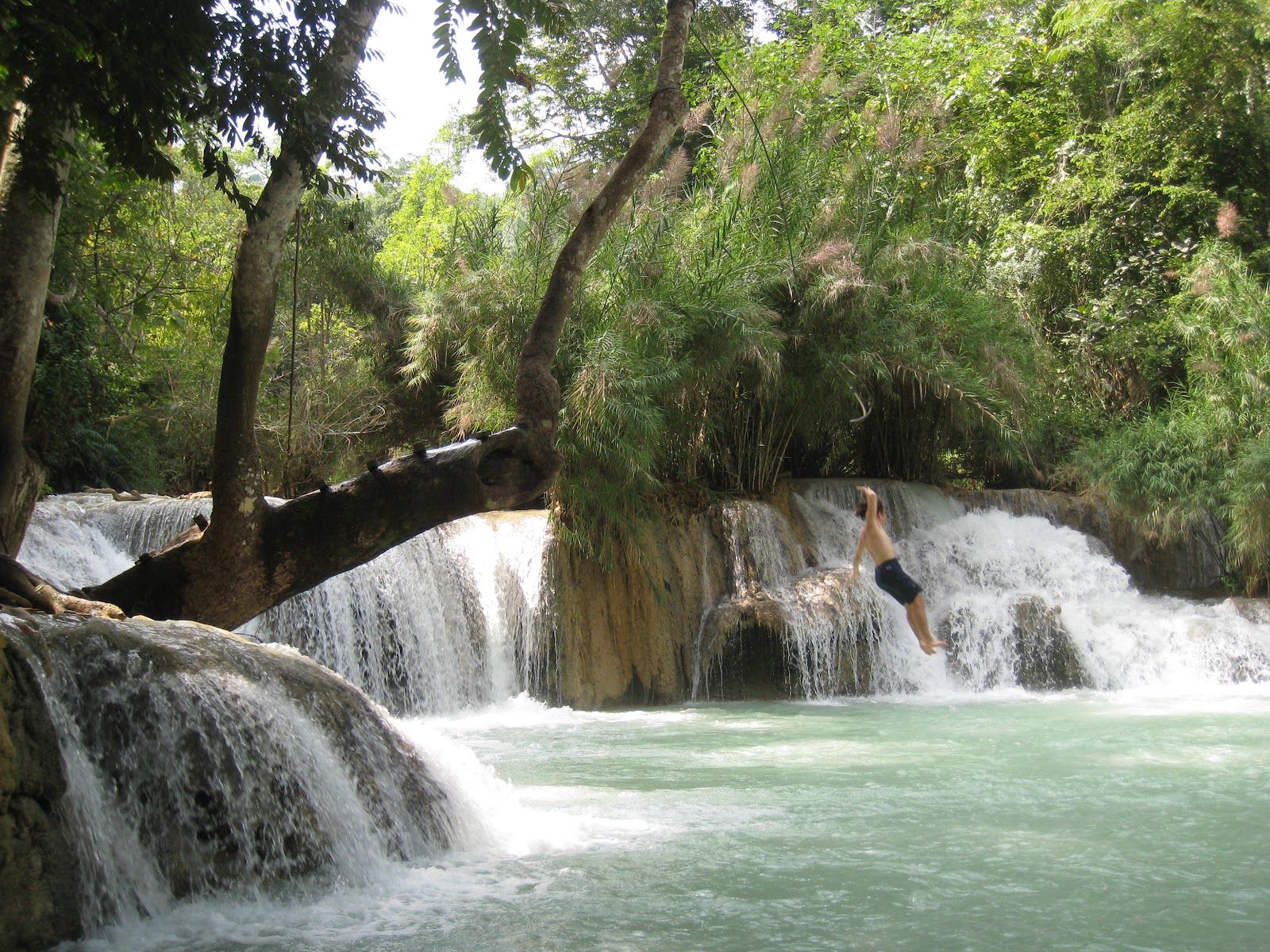
Our experience with the slack-jawed masses on Mount Phousi convinced us that we should leave early to visit the nearby and famous Kuang Si falls.  Haggling with a bunch of wily tuk tuk drivers early in the morning is always a great way to start the day, and before we knew it we were put-putting up to the falls.  Kuang Si falls are a special set of small falls and pools below one large fall.  Minerals in the water (we think) turn the color a distinct minty color.  Those same minerals cling to rocks, dirt, trees, and even a staircase leading up to the top of the large fall, making the many areas in and around the falls look like they are dripping, alive with a shiny, rumpled substance.  The pools themselves are excellent for swimming, leaping into from a rope swing, and getting your feet nibbled fish (a service tourists all over SE Asia pay for in malls that we were tickled - literally - to get for free).


In a surprising and educational twist, Kuang Si falls is home to The Bear Rescue Sanctuary (also called Bear Laos, a play on the favorite national beer, Beer Laos), a sanctuary that rescues sun bears from all over SE Asia.  The sanctuary works to teach people (Laotians and foreigners, alike) about the plight of bears in Asia, who are hunted legally and illegally for paws, fur, and bile.  We also learned that sun bears really like hammocks and solving food puzzles to get their daily meals.  The Bear Laos project was a nice addition to a beautiful area outside of the tourist-crush of Luang Prabang.  We hung around the falls for almost 4 hours and hopped in the back of our tuk tuk, after summoning the driver away from what looked like an all tuk tuk driver pool tournament, and sped back to LP just as everyone else was starting to crowd the falls and pools in the heat of the afternoon.

We left LP liking it a lot more than that first night, but still less hypnotized by it's tourist friendliness than other "tourist towns" we'd been to.  The charms and pleasant surprises that remainged in LP left us wanting what we couldn't have: The entire town, it's buildings, temples, monks, and Mekong vistas, to ourselves.  LP was really an excellent stop in some ways, but for us two days was enough.  We left LP one day earlier than we planned, curious to see what the current capital, Vientiane, would be like.

Thursday, November 17, 2011

Loving Laos: Luang Nam Tha


Luang Nam Tha is a big eco-trekking destination in South East Asia.  And for good reason.  It is easy to book a trek that is led by a local guide to one of the many surrounding villages.  Many of the (legit) companies work hard to keep the environmental impact of this type of tourism to a minimum and give a percentage of their earnings to the villages visited on the treks.


Our particular trek was a two day, one night hike to a little-visited Lahu village.  Our fantastic guide told us the village had only been seeing tourists for about a year, and the way they gathered to watch us arrive, eat, sleep, and leave proved he was right.  The best part about visiting and sleeping in the village is that the villagers were (mostly) as interested in us as we were in them.  It was truly cool to wake up to several ladies standing in the door of our abode (a bamboo guesthouse) curiously watching us sleep and wake up.  In Laos all foreigners are called Falang.  Our guide told us that the villagers "Want to see how falang eat, how falang sleep - everything."


We felt blessed to have the opportunity to connect with the villagers, both verbally with the translation help of our guide after dinner with the son of the chief, and non-verbally by playing with the children.  The village has had electricity for only seven months.  Most of the huts now have refurbished solar panels so the families can have a light in the evenings.  We noticed some people had cell phones, but they seemed to be used mainly for playing a few favorite songs rather than phone calls.  The son of the chief told us that he and the other villagers liked the comforts of the modern world, but they couldn't afford them.  They are mostly subsistence farmers, growing all their own rice and supplementing their incomes by raising and selling pigs, chickens, dogs, and cows.

Everyone, us visitors and the villagers too, was shy at first but got more and more bold as our day went on.  The children were the first ones to warm up.  There is something universal about the vibrant energy of children.  They were making faces and flirting with us before most of the adults came back to the village from working in the rice fields during the day.  Jeff proved that being a goofball can be useful, as he used his ability to make a fool of himself to connect with the younger children.  Jumping on one leg, making faces, and playing "run past the white guy without getting touched," are excellent ways to break the ice.  Many of the adults would laugh and smile as we engaged their children in games and antics - including but not limited to copycat games and drawing in the dirt.  Everyone loves children.  We found communicating with them didn't need to involve language, and that as we connected with the children of the village, the adults opened up too.

Digital cameras were another god-send in communicating with our new friends.  Many of the villagers, but the children in particular, got a kick out of looking at their pictures after we took photos of them.  Despite the extreme differences of the lives of the Lahu and our own lives back home, our interactions with these children confirmed what we had been experiencing again and again on our trip: kids are kids everywhere.  They're shy, they laugh, they find joy in the simplest of pleasures, and each has their own unique personality.


Laos is one of the 20 poorest nations in the world.  We saw many ranges of life-styles, from modern homes to makeshift bamboo shacks, as we traveled the country by bus and foot.  There are some non-profit groups and other organizations that are working hard to make a difference, but for the most part life is hard for many Laotians.   Despite the extreme poverty, we found most people to be unbelievably kind and warm.  The people in the Lahu village were no exception.  They were truly glad to have us visit them, and we felt honored to have the chance to do so.   The experience of staying at the village and learning about how they live made us feel closer to Laos and it's amazing people.  We left home hoping this trip would change us and trekking out of Luang Nam Tha is an example of how quickly and unexpectedly those changes can happen.  We came back down from our trek thinking a bit differently about our own lives.

Crossing into Laos: A Trip Through Time

Crossing the Thai/Laos boarder from Chiang Khong, Thailand to Huay Xai made us feel like we were finally in South East Asia. Since we'd already been in SE Asia for a combined total of nearly 2 1/2 months, we should probably rewind to the beginning of this strange-feeling travel day day to explain:

We left our Chiang Mai hotel at 7:30 in the morning, bus tickets to Chiang Khong in hand.  Our bus was scheduled to leave at 8:30, though we didn't get on the road until about 10am due to the bus being late and having broken air conditioning (which was never really fixed, just tinkered with and imagined to be repaired).  Our bus tickets were for a "VIP" bus, which is supposed to have nicer seats and be a comfier all-around ride.  In a business savvy move, the bus company gave everyone the old switcharoo (and eventually a small refund) by putting us all on a much crappier, older bus with broken air, and an uncomfortable triple-seat on one side.  These buses can hold more people, so the bus company was able to pack it full and make a few extra bucks.  Since the journey is over five hours, this changed the happiness-level of our day considerably.

Speaking of rating systems, the triple seats had a comfort level of negative 13 on a scale of 1 to 10.  The back of the seats were separated and curved like horrible, tiny bucket seats, but the actual seating portion was a bench.  This was the first time we had ever seen bus seats like this, and we hope it is the last!  The bus ride may not have been the worst we've ever taken, but it went briefly from unpleasant to a true pain in the back when we had a third seat-mate for about an hour.

Our bus arrived in Chiang Khong an hour and a half late, but that was no biggie because we really had no plans.  And, as thumbs down as the bus ride was, Jeff will always pleasantly recall his conversation in broken English with a mother and daughter.  The latter was on break from studying to be a nurse in Bangkok, and the former was an English teacher (which made us curious about her students' English, because hers, while not terrible, was basic at best).  Having the opportunity to have a conversation with locals is always priceless.

Our day got interesting after we tumbled off the bus in Chiang Khong.  You see, the bus drops you off at the bus station, which is some distance from the "port" (we'll use that term really loosely here).  We caught a tuk tuk to the "port" where a man in a small room asked us where we were going in Laos and stamped our passports.  We then walked down to the edge of the mighty Mekong and bought two tickets for the boat across to Laos from two women sitting at a folding table under an umbrella.  They had two books of tickets, the lower priced tickets presumably for Thai and Laos citizens, and a money box like the one used at high school basketball games and car washes.  We had our long tail boat to ourselves.  Our driver didn't say anything, but he ferried us swiftly from one country to another.  A true professional.  He wasn't responsible for the beauty of the setting sun, mountains, or atmospheric clouds, but they really helped make our ride with him memorable.  His boat can be best described as rickety. The silent captain, rickety boat, and misty mountains made the scene perfect.  For some reason crossing the Mekong the way we did completed some old, deep-set imagery we had in our heads about what SE Asia is supposed to look and feel like.  Oddly, we both felt like we were just then going to the rural, makeshift, developing South East Asia we'd been expecting. 

The only official building at the Laos side of the Thai/Laos border at Huay Xai

Two other things, one on each side of the border, helped set the stage for our Laos adventure:  A small shop with a homemade sign above the "port" that apparently exchanged money caught our eye as we exited our tuk tuk since we needed some Laos Kip.  We were able to haggle for a better exchange rate (a first for us both) and waived goodbye as the owner slumped back down in his chair, guitar in hand.  The other was just the general state and atmosphere of the offices on the Laos side.  There is nothing really stopping you from running up the boat ramp and into Laos.  We chose to go the legal route and checked in at a small window we guessed to be immigration.  Passport scanning equipment?  Computers?  Forget about it!  This is probably what this border crossing looked like 50 years ago, except maybe for the AC unit that turned the office into a refrigerator.  There wasn't any customs to speak of, but some guys dressed in t-shirts got our paperwork going for our Laos visas.  We paid a uniformed man who also signed and stamped our visas and passports, and were on our way.  The whole thing was as laid-back as a border crossing can get.  We'd heard Laos took it pretty easy, but we never expected a border crossing quite like the one we encountered!

We found a guest house and wondered the town a bit before finally settling down with a mind-calming view of the sun setting over the Mekong.  We added some of Laos' favorite cold beverage, Beer Laos, and let the beautiful scenery take center stage.  The large brown river and the misty mountains in the background really felt like SE Asia. It's hard to explain, but we felt like we finally made it!